Showing posts sorted by date for query sunrise. Sort by relevance Show all posts

Friday, June 26, 2026

Glass Mountain in Queensland for Skywatch Friday


The photograph was taken beneath the clear, uncompromising light of midday, far removed from the forgiving glamour of sunrise or sunset. There is no wash of golden hour magic here, no theatrical blaze of colour to soften the landscape. Instead, the scene rests in the honest illumination of the Queensland sun, revealing every contour and texture with quiet certainty.

In the middle foreground, young pine vegetation rises in dense patches, reclaiming the land in shades of green. The regrowth forms a living carpet stretching towards the horizon, a reminder that landscapes are never fixed but are always renewing themselves through cycles of disturbance and recovery. Beyond this sea of foliage stand the remarkable peaks of the Glass House Mountains, their volcanic forms emerging abruptly from the surrounding plains. Under the stark midday light, they resemble scattered nuggets cast upon the earth, or perhaps rice balls placed across an immense green tablecloth. Their silhouettes are simple yet unmistakable, rising alone and independent, each mountain possessing a distinct shape and personality.

These mountains are the eroded remnants of volcanic activity that occurred more than twenty-five million years ago. Long after the volcanoes themselves vanished, the harder volcanic plugs resisted the relentless work of wind, rain, and time, remaining as isolated sentinels while the softer surrounding landscape wore away. What survives today is a geological story written over millions of years—a rare collection of peaks standing apart from one another like ancient monuments left behind by a vanished world.

Yet the significance of the Glass House Mountains extends far beyond geology. For countless generations before European arrival, this country belonged to the Jinibara and Kabi Kabi peoples, whose connection to these mountains reaches deep into the Dreaming. The peaks are not merely landmarks but ancestral beings woven into stories of creation, kinship, law, and identity. Each mountain carries its own name, character, and place within a rich cultural landscape. To Aboriginal people, these towering forms are part of a living narrative where the land itself speaks of relationships between ancestors, people, and country. The mountains remain sacred places, continuing to hold profound cultural and spiritual significance today.

European history arrived comparatively recently. In 1770, Captain James Cook observed the distinctive peaks from the deck of the Endeavour as he sailed north along Australia's east coast. Their clustered shapes reminded him of the glass furnaces—or "glass houses"—of Yorkshire, and he bestowed the name that remains in use today. Since then, the mountains have become icons of Queensland, attracting travellers, hikers, artists, photographers, and naturalists who are drawn to their unusual forms and commanding presence.

Standing before them in the clear light of noon, one sees neither spectacle nor illusion. The mountains do not rely on dramatic skies or fiery sunsets to impress. Their power lies in their permanence. They rise from the coastal plain with an ancient confidence, bearing witness to volcanic upheavals, Indigenous stewardship stretching back tens of thousands of years, European exploration, forestry, farming, and modern conservation. Beneath the bright Queensland sun, they appear almost deceptively simple—green plains, pine regrowth, and a handful of dark peaks. Yet within that simplicity resides a story measured not in decades or centuries, but in deep time itself.


Sony A7RV

FE 20-70mm f4 G


Linking Skywatch Friday

Friday, June 19, 2026

Boort Sunrise in Rural Victoria for Skywatch Friday


The morning wore a veil of mist, and the first shards of sunlight were only just beginning to prise open the darkness. The road stretched ahead through the Wimmera, quiet and spectral, as I drove towards Donald for a job interview many years ago. The landscape possessed a strange beauty at dawn—half dream, half memory—its paddocks and gum trees emerging slowly from the fog like forgotten figures.

What I did not know then was that the town seemed wrapped in another kind of mist: an insular culture where belonging was measured not by character but by ancestry. To be considered a local, one almost needed five generations buried in the district cemetery. Newcomers could live there for decades and still be introduced as "not originally from here."

There was a peculiar pride in that exclusivity, as though longevity alone conferred wisdom or virtue. Yet beneath it lingered a culture of small-town bullying and parochial politics that often seemed more interested in guarding the gate than opening it.

And so I found myself asking a simple question: why would I want to be your local anyway? What great prize awaits on the other side of that fence? The mist eventually lifted from the paddocks, but not from the town. I drove away with the sunrise at my back and the comforting thought that some clubs are far more impressive from the outside than within.


Sony A7RV

FE 70-200mm f2.8 GM


Linking Skywatch Friday

Saturday, March 28, 2026

Pet rooster in Taipei Floral Market for Saturday Critter


In the languid hum of a Taipei flower market, where petals breathe out quiet perfumes and leaves shimmer beneath careful hands, there stood an unexpected presence—a rooster, misplaced among the gentleness of blooms.

He was not framed by fields or dawnlight, but by stacks of carton boxes and the restless commerce of the day. His wings, bound awkwardly in a crinkling sheath of plastic, rustled faintly each time he tried to settle himself, as though even the air resisted his confinement. One leg, tethered to the corner of a worn box, marked the small circumference of his world—a circle he traced again and again, step after step, never quite arriving anywhere.

Above him, a harsh tungsten glow burned without mercy, flattening the softness of his feathers into dull bronze and shadow. It was not the golden warmth of sunrise he might have known, but a ceaseless, artificial day that neither shifted nor forgave. Beneath that light, he moved constantly—restless, searching, perhaps remembering something instinctual and distant: open ground, cool earth, the unmeasured freedom of wings unbound.

Around him, orchids bloomed in silent extravagance, their delicate forms untouched by the small sorrow at their feet. Customers passed, pausing to admire petals, to weigh beauty in their hands, while the rooster remained—a quiet counterpoint to the market’s abundance.

And in that fleeting moment of crossing paths, there was a subtle ache: the recognition that even in a place devoted to life and growth, something living could still be held in such narrow, unyielding restraint.


Linking Saturday Critter


Friday, February 20, 2026

Goornong Sunrise for Sky watch Friday


In earlier years I drove long arterial roads into the rural margins of Victoria, the boot packed with files and instruments, the morning still undecided between frost and light. The work took me through paddocks silvered with dew and towns that woke slowly, bakeries first, then fuel stations, then the school crossings. I learned the discipline of dawn: how it breaks differently over stubble than over pasture, how mist lifts from creek flats in long, patient veils.

On the run north from Bendigo toward the Murray, the highway passes through Goornong—a small settlement set amid broadacre farming country. Its name is commonly traced to an Aboriginal word, often said to refer to mallee fowl, a reminder that this was once a landscape of woodland and grass before wheat and sheep laid their geometry across it. The district gathered itself in the late nineteenth century, when selectors and railway lines stitched the interior to markets; the railway’s arrival in the 1870s helped turn a scattering of holdings into a town with a school, a hall, and the steady rhythms of agricultural life.

By the time I was passing through for clinics, Goornong kept its quiet competence. Silos stood like sentinels against a wide sky. Fences ran straight as ruled lines. In summer the fields browned to parchment; in winter they breathed green again. And always, on the eastbound stretches, the sun would lift without apology—low, fierce, and perfectly aligned with the windscreen. It poured into the car in molten bands, turning the bitumen into a river of light and forcing me to squint behind the visor.

Those drives became a kind of liturgy. The glare was inconvenient, yes, but it was also exacting and honest—an unfiltered sunrise over country that has endured cycles of cultivation and drought, rail and road, departure and return. In that brief corridor between Bendigo and Echuca, the day announced itself without ornament, and I carried its brightness with me into the clinic rooms.

Sony A7RV

FE 70-200mm f2.8 GM


Linking Skywatch Friday


Friday, August 15, 2025

Nyah West sunrise for Skywatch Friday


Nyah West is the outback town that I visited for monthly nursing home visit. Outside the care facility, the sunrise is always pretty like this.


Sony A7RV

FE 135mm f1.8 GM


Linking Skywatch Friday


Sunday, March 16, 2025

Cape Woolamai for Sunday Best


I have visited this place numerous times, and this particular visit is from the past. Each time I come here, I inevitably acquire a new injury.


The Pinnacles of Phillip Island are a striking natural rock formation located within the Cape Woolamai region, one of the island's most scenic and rugged landscapes. These towering granite structures, sculpted by centuries of wind and ocean erosion, rise dramatically along the coastline, offering breathtaking views, especially at sunrise and sunset when the rocks are bathed in golden light.


Sony A7RV

FE 20-70mm f4 G


This is linking Sunday Best


Friday, January 10, 2025

Balnarring Jetty for Skywatch Friday


This picturesque spot is perfect for anyone looking to connect with nature, breathe in fresh sea air, and soak up the tranquil vibes.

During sunrise and sunset, the jetty transforms into a canvas of breathtaking colors, reflected beautifully on the calm waters below. It's a haven for photographers, artists, and anyone who appreciates the simple beauty of nature. The jetty is also a fantastic spot for fishing enthusiasts, offering a peaceful setting to cast a line and potentially catch a variety of local fish.


Sony A7RV

FE 20-70mm f4 G

Linking Skywatch Friday


Sunday, December 29, 2024

Childer's Cove for Sunday Best


Childers Cove is a small, crescent-shaped beach framed by rugged cliffs and dramatic rock formations. The towering limestone cliffs, reaching up to 70 meters (230 feet) above the turquoise waters, create a natural amphitheater showcasing the raw beauty of the coastline. The beach itself is low and flat, with a shallow bay floor, making it ideal for a leisurely stroll or beachcombing.

The cove holds a poignant history as the site where the wooden barque "Children" was wrecked after striking reefs close to shore in 1839. Despite its somber past, the cove exudes a unique charm, inviting visitors to explore its untouched serenity.

Childers Cove is not just a beach; it's an ecosystem teeming with life. Keep an eye out for inquisitive penguins waddling on the shore, listen to the melodic calls of seabirds soaring overhead, and spot playful dolphins dancing in the waves. The diverse flora, including coastal shrubs, wildflowers, and native grasses, adds to the vibrant backdrop of this scenic sanctuary.

From the golden hues of sunrise painting the cliffs to the dramatic silhouettes at sunset, Childers Cove is a photographer's dream. Capture the raw power of the ocean crashing against the rocks, the playful frolicking of dolphins, or the serene atmosphere of the secluded beach.

Childers Cove is accessible via a well-maintained gravel road located off the Great Ocean Road, near Nullawarre. Limited parking is available near the beach, and toilet facilities can be found at the nearby Murnanes Bay car park. Remember to be sun-safe and bring appropriate footwear for exploring the rocky terrain.

Escape the crowds, breathe in the fresh ocean air, and immerse yourself in the tranquility of this unspoiled paradise. Whether you're a history buff, nature enthusiast, or simply seeking a relaxing retreat, Childers Cove offers something for everyone


Sony A7RV

FE 20-70mm f4 G

Linking Sunday Best


Friday, June 14, 2024

Sunrise at Sandridge Point Melbourne for Skywatch Friday


I just cant continue waking up at 3 am driving to Melbourne for a sunrise anymore


Sony A7RV

FE 70-200mm f2.8 GM


Linking Skywatch Friday


Sunday, February 4, 2024

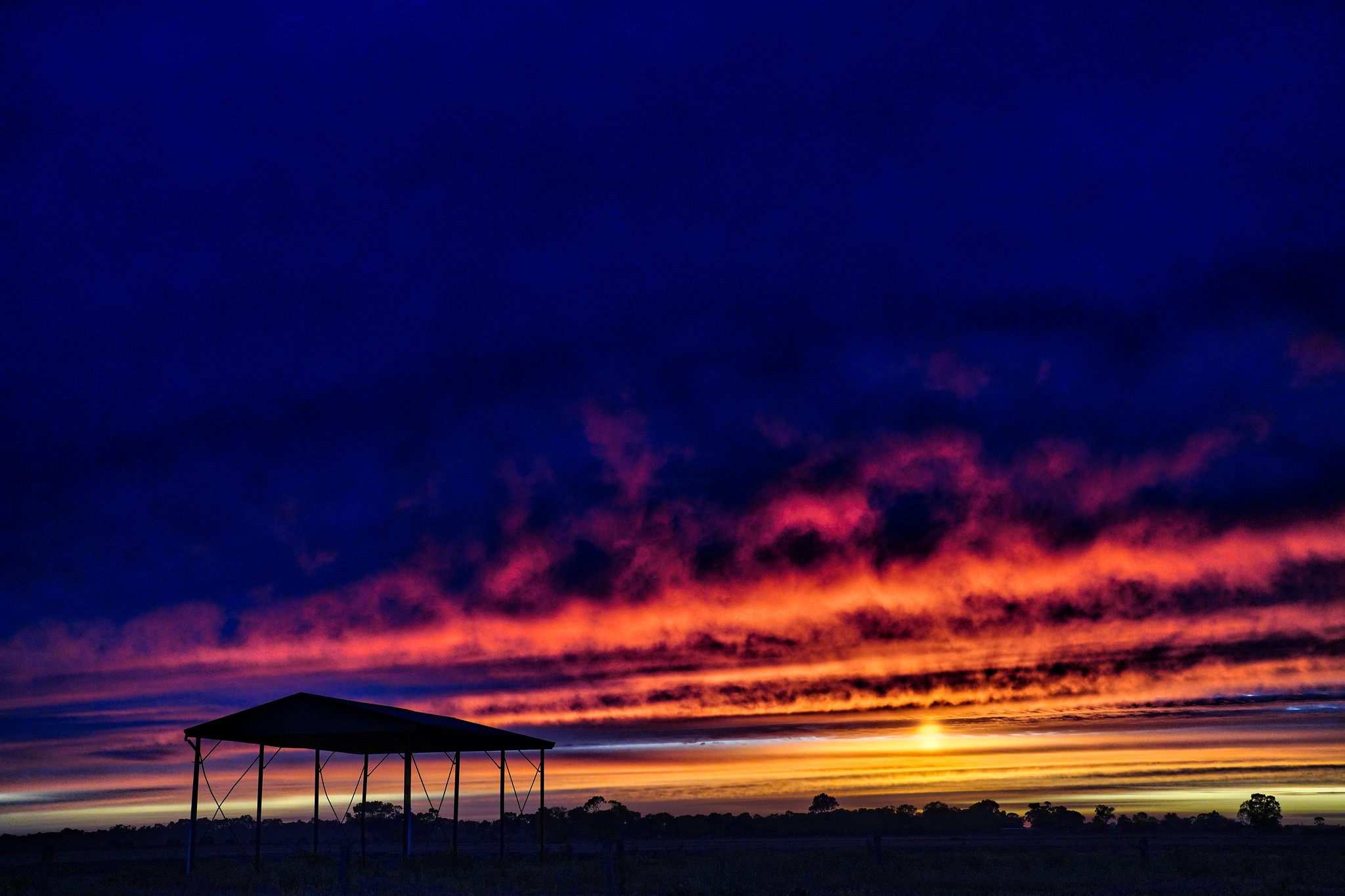
Nyah West Sunrise for Sunday Best


Nyah West is a tiny town in the outback. This is a sunrise shot that I rarely take in my hobby. 


Sony A7RV

FE 20-70mm f4

Linking Sunday Best


Friday, March 31, 2023

Melbourne North sunrise for Eileen's sky watch Friday


Just in time coming back to Melbourne stormy weather. A nice stormy weather before sunrise in Melbourne North. 


There are 1 giga of travel photos in my hard disc. I gonna process them gradually over time. Funny that I received a call from my good pal for a nice Japanese dinner in the city. It is true that friends are older the better. I miss the home feeling. 


Sony A7RIV

FE 70-200mm f2.8 GM


Linking Skywatch Friday


Wednesday, September 14, 2022

Cold morning at Maiden Gully, Bendigo


A frosty morning. The sky is like quite glorious. 

Sony A7RIV

FE 70-200mm f2.8 GM


Sunrise Photos


Thursday, September 1, 2022

The Sunrise in Nyah West, Victoria


I am a rural geriatrician. So, I provide consults to the remote nursing homes in Vic-NSW border towns. This sunrise view is the bonus view I often get. This only last 5 minutes or so before the sky became a wonton. 

The only concern is that big trucks and cargo carriers often speed without a worry in the world. Taking a shot by the roadside is quite risky. 


Sony A7RIV

FE 50mm f1.2 GM


Sunrise


Monday, August 29, 2022

Sandridge Pier, Melbourne, Australia


Sandridge pier is the classic location to take a sunrise shots of Melbourne skyline


The pier is an easy access. I arrived at 4 am with a significant sleep deprivation. Well, anything for a photo. I did need quite a few more cups of coffee after this. 


Sony A7RIV

FE 70-200mm f2.8 GM


Sunrise


Monday, August 1, 2022

Sunrise near Kyabram Victoria Australia


My buddy was on the phone with me the whole evening. He was isolating for his respiratory disease. The talk was all about managerial capitalism. In deed, my last 10 years of experiences in public sector is just for short term gain. Everything is so coded and benchmarked. Who gives it a rat about long term goals of the organisations?

I  guess the morning view like this is a better mood cleanser for me.

Sony A7RIV

FE 70-200mm f2.8 GM


Sunrise posts


Saturday, July 9, 2022

Corop, Northern Victoria, Australia


Corop sunrise through the fog. It was so freezing!

Sony A7RIV

FE 50mm f1.2 GM


Monday, December 13, 2010

What is chromatic aberation? (CA)


This image is taken by Pentax A 50mm f1.2 at federation square of Melbourne.
Chromatic Aberration

Many a times we come across various Optical terms that seem to fall on deaf ears. Not only they prove to be jargons but also drown us in a state of confusion as it is a human-tendency to start guessing thing which we don’t know.

Chromatic Aberration is one such term that many of you might no be able to explain. A person who uses any form of camera must know this term well as it is closely related to property of a camera-lens.Starting with the basic meaning of Aberration, it is stated that it is the inability of a lens to produce an exact image, particularly at the edges of the photograph. Hence Chromatic Aberration would simply mean the inability of a lens to converge all the wavelengths to a single common point, thus causing a blur. You can also say that Chromatic Aberrations are color deviations of lens systems.This is a common problem in large aperture telephoto lenses that are used to detect astronomical activities and even shoot the closest wild pictures of rare species.In modern times, most of the expensive cameras have special lenses that are protected from such defects. But in most of the normal cameras, the problem of Chromatic Aberration persists.

Every one of us has heard a common term in photography, ‘Purple Fringing’. The extremely small micro lenses of our digital camera that are used to collect more light for each CCD pixel are usually built and fine-tuned in such a way that they can focus the green wavelength perfectly.

The inability to focus the red and blue wavelengths results in purple fringing around the images.Ordinary cameras which have a very small pixel-pitch as in non-DSLR digital cameras have to incorporate a special processing step to remove it.Sometimes extremely sharp digital cameras may face the same problem. The image captured by the lens might have some really small areas. This tiny area is unable to stimulate red, blue and green color pixels and due to absence of some wavelength the captured image has some portion stored with incorrect color.Some of you might be thinking that avoiding colored photography is the simplest solution to this problem. But you are in for a surprise again because Chromatic Aberration affects Black & White Photography also. The phenomenon blurs the image completely. This problem can be overcome by exposing your original image for a longer duration of time to the lens.A very common example to experience is the blooming period for new leaves.

At the time of sunrise, try capturing the image of the filtered sun-rays that pass in between the new leaves and reach the ground. When you see the image, you’ll see the increasing visibility of purple-fringing.Hence, it is a good piece of advice to thoroughly check the lens features for Chromatic Aberration when you go to buy a new camera.