In March 2026, I was once again told that I could no longer provide bulk-billed geriatric services to nursing homes in the remote parts of Victoria. Another change of hospital management had arrived, bringing with it the familiar ritual of replacing existing arrangements with something new. In the world of corporate administration, it seems, little is sacred except the perpetual need for change. This was the fifth time in twelve years that I had found myself at the receiving end of such a decision.
This time, however, I could no longer be bothered to play the corporate game. I had learnt enough from twelve years of service to know how little one's efforts might count when a new set of managers arrived with their own ideas, their own priorities, and their own people. I simply gave them the answers they seemed to want and left it at that.
Over those years, I had gone to considerable lengths to keep the service alive. Every referral from a general practitioner had to be worded appropriately and satisfy the necessary requirements. I paid for motel accommodation when an overnight stay was needed, drove for hours across the region, and often spent six hours on the road for a round trip to visit nursing homes with fewer than twenty residents. The roads were another story altogether, riddled with potholes that seemed to offer a fitting metaphor for the state of rural healthcare itself.
At the facilities, there was often no continuity of staff and little reliable clinical information to guide my assessments. The people who cared for these residents changed with bewildering regularity, and the knowledge that should have accumulated over months and years was repeatedly lost. Families, meanwhile, were often described as supportive, though some residents received little more than an occasional visit, perhaps once a year. Between the administrative machinery, the revolving door of care staff, and the distance separating these elderly people from their families, the responsibility for understanding their medical and functional decline sometimes fell upon remarkably few shoulders.
And here lies the irony. Some of these residents have survived years of imperfect care, changing personnel and fragmented clinical oversight. I have come to know them through repeated assessments, through the slow accumulation of small observations, and through the familiarity that only time can provide. In some instances, I suspect I know more about their circumstances than the people who see them every day, including their general practitioners and care managers.
Yet, after twelve years, I find myself being shown the door once again.
There is something quietly absurd about this arrangement. A service that has persisted through years of practical difficulties, long journeys, endless paperwork and considerable personal expense can apparently be discarded with a change of management. The institutional memory disappears overnight, while the residents remain exactly where they have always been, frail and dependent, waiting for someone to take the trouble to understand them.
I have little doubt that, within the next six months, somebody whose name I have never heard will eventually approach me to ask whether I might return to provide consultations. Perhaps another change of management will have taken place. Perhaps the shortcomings of the new arrangements will have become apparent. Perhaps someone will suddenly remember that these residents need a geriatrician who knows their histories and understands the peculiar difficulties of caring for the elderly in remote communities.
But this time, I will decline.
For too long, I have allowed professional duty to carry me beyond the boundaries of what could reasonably be expected of one person. Much of what I have given to this region has amounted, in practical terms, to a form of pro bono service, sustained by a sense of responsibility rather than any meaningful recognition or institutional support. I do not regret the care I have provided, nor the time spent with those who needed it. My regret lies elsewhere: in the realisation that twelve years of commitment can be so easily forgotten by the very system that benefited from it.
Perhaps this is the peculiar fate of working in neglected corners of the country. The work is essential until it becomes inconvenient. The practitioner is indispensable until a new administrator decides otherwise. And the elderly residents, who have no influence over the machinery governing their lives, are left to bear the consequences of decisions made far away from their bedsides.
I shall leave the service behind without bitterness towards the residents themselves. They deserved better, and they always will. But there comes a time when one must recognise the difference between serving a community and allowing an institution to take one's efforts for granted. Twelve years is a long time to keep knocking on a door that opens only when somebody else finds it convenient.
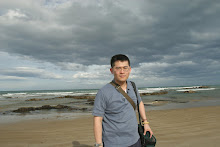
The photographs accompanying these reflections were taken in the quiet country around Nyah, beside the broad reaches of the Murray River.
The first photograph offers a sweeping view of the river, a landscape I have always enjoyed seeing in this part of Victoria. The Murray moves through the country with a patient, unhurried presence, indifferent to the ambitions of administrators and the changing fortunes of institutions. Its waters have witnessed generations come and go, carrying their reflections downstream without ceremony. There is a reassuring permanence in such a landscape, a reminder that some things endure without requiring the approval of anyone in an office.
The second photograph captures an old, weathered Post letterbox, its surface marked by the beautiful colours of rust. I have always had a fondness for such humble objects. Their peeling paint, corroded metal and faded presence tell stories that newer things cannot. They have stood through seasons of rain and heat, quietly collecting the marks of time. To some, the rust might suggest neglect. To me, it possesses a certain dignity, the beauty of something that has endured without pretending to remain untouched.
Perhaps that is what draws me to these remote places. Beyond the noise of corporate decisions and the endless reshuffling of responsibility, there is still a landscape that asks nothing of me. The river flows, the old letterbox rusts, and the country carries on in its own way.
After twelve years of service, perhaps it is time for me to do the same: to turn away from the machinery of institutions and return to the quieter business of observing, photographing and finding meaning in the things that remain.
Linking Treasure Tuesday