Friday, January 23, 2026

Balnarring Beach Sunset for Skywatch Friday


Joel and I were at Balnarring Beach for the water—for that long exposure where the tide usually softens itself around the pylons. Instead, the bay had retreated to an extraordinary low, the lowest I have seen here, leaving the pylons fully exposed. They rose from the sand like a stripped framework of memory, their timber blackened and silvered by salt, their lower posts furred with barnacles and weed, each one carrying the slow record of tides, storms, and passing years. Without the water’s movement, their age was no longer hinted at but plainly stated.

The town itself felt profoundly asleep. Balnarring offered no spectacle, only a quiet so complete it seemed deliberate, as though sound had been thinned out by the same withdrawing tide. The beach widened into stillness, and the bay refused to perform, holding to a flat, patient calm.

Joel was beside me, though not within the frame. His earlier suggestion lingered—that one might one day retire to a place like this, where time loosens its grip and days are allowed to repeat without consequence. Standing there, with the pylons rooted and the water absent, the thought felt less like an idea and more like something the landscape itself had already decided.


Sony A7RV

FE 20-70mm f4 G


Check out Skywatch Friday


Thursday, January 22, 2026

Balnarring Beach Cape Schanck for Water H2O Thursday


We miscalculated the tide.
Balnarring Beach, which we had imagined brimful and reflective, met us instead in retreat, the sea drawn back into itself, exposing long bands of wet sand and the quiet ribs of the shore. The pylons we came to photograph at high tide stood more naked than expected, their purpose momentarily suspended between water and air.

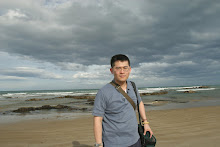
In the distance is Joel. As always, he has rushed ahead, pulled forward by instinct or impatience, it is hard to say. Seen from afar, his figure becomes a measure rather than a subject, offering scale to the frame and reminding the eye how wide this coast really is. Against the vastness of the beach, a single human presence sharpens the sense of space and time.

Balnarring Beach has long been shaped by such rhythms of advance and withdrawal. For thousands of years, the Bunurong people knew this shoreline intimately, reading tides, winds, and seasons as living knowledge rather than variables to be checked. Later, European settlers arrived along Western Port’s fringes, drawn by fishing, grazing, and the promise of a gentler bay. The weathered pylons and scattered maritime remnants along this coast speak quietly of those eras: utilitarian structures built to serve trade, boats, and labour, now repurposed by photographers and walkers as anchors for memory.

Low tide reveals what is usually hidden. It flattens the drama but deepens the story, exposing textures, scars, and distances that high water conceals. Standing there, camera in hand, with Joel already ahead and the sea momentarily absent, the scene becomes less about the image we planned and more about the place asserting itself—patient, indifferent, and enduring, waiting for the tide to return.


Sony A7RV

FE 20-70mm f4 G


Linking Water H2O Thursday


Wednesday, January 21, 2026

Little Flinders Lane sign for Sign2


A rustic sign such as this impresses precisely because of what it says and how little it needs to say. Sprinkler stop valve inside. The words are plain, functional, and unadorned, yet they carry the quiet authority of purpose. There is no invitation here, no flourish—only instruction, rendered permanent by material and time.

Set along Little Flinders Lane, the sign belongs to the working grammar of the city. It speaks from an era when buildings were designed to be understood by those who maintained them, when safety and utility were marked clearly and left to do their work without spectacle. Its weathered surface bears the accumulated patience of years, the grain and fading evidence of a life spent outdoors, watching the lane change around it.

There is a classical restraint in such honesty. The sign does not pretend to be art, yet it achieves a kind of unintended poetry through endurance. In a city now saturated with curated surfaces and clever interventions, this simple notice remains grounded, a reminder that Melbourne was once built from instructions as much as ambitions.

“Sprinkler stop valve inside” reads almost like a quiet aside to the initiated—a message meant for hands rather than eyes, for responsibility rather than admiration. And yet it draws attention precisely because it has survived. In the narrow light of Little Flinders Lane, it stands as a modest relic of civic care, where even the most utilitarian object was made to last, and in lasting, acquired grace.


Sony A7RV

FE 16mm f1,8 GM


Linking Sign2


2026 lamb commercial made me laugh again 


Tuesday, January 20, 2026

Bridgewater Bay Blairgowrie for Treasure Tuesday


Bridgewater Bay reveals a quieter temperament in this light, as if the coastline itself has agreed to pause. The long exposure smooths the restless surface into a sheet of silk, disguising the true mood of the water, which only moments before had been choppy and impatient. What remains is an illusion of calm, a visual courtesy offered by time stretched thin, where motion is not denied but gently persuaded into stillness.

At sunset, the bay becomes a natural archive of colour. The sky spills amber, rose, and indigo into the shallows, and the water receives them without argument, holding each hue briefly before surrendering it to dusk. This hour has always belonged to transition: day loosening its grip, night arriving without ceremony. It is the most honest time to see the land, when contrasts soften and everything appears briefly reconciled.

Bridgewater Bay sits along a coast shaped by endurance rather than spectacle. Its limestone platforms were laid down millions of years ago when this land lay beneath a shallow sea, built slowly from compressed shells and marine life. Wind and tide have since worked with patient insistence, carving the rock into shelves and pools, opening crevices where salt-tolerant plants take hold and seabirds rest between flights. The bay has long served as a refuge—first for marine life in its calmer pockets, later for people drawn to its relative shelter along the Mornington Peninsula’s exposed edge.

Even now, the place carries that layered memory. The stillness seen here is not permanent; it is borrowed. Soon the water will resume its chatter against stone, and the colours will drain from the sky. Yet for a moment, Bridgewater Bay allows itself to be seen as something almost contemplative—a meeting point of geology, light, and time, where the sea briefly pretends to be at rest.

Sony A7RV

FE 20-70mm f4 G


Linking Treasure Tuesday


Monday, January 19, 2026

Brunswick Mural next to a carpark for Mural Monday


There is no name to it, only colour: a burst of pink and purple pressed hard against brick, an animated mushroom grinning as if it has sprouted overnight from the wall itself. Beside it runs a loose string of graffiti, hurried, layered, half-erased, like a conversation that never intended to last. The mural does not ask for permanence. It announces presence, now.

Brunswick has always understood this language. Once a place of factories, foundries, and migrant households stitched together by long shifts and shared fences, it learned early how to absorb new voices without fully surrendering the old. Greek, Italian, Lebanese, Turkish—each wave left behind traces in shopfronts, bakeries, and the cadence of the streets. The walls, too, learned to listen.

In recent years, the palette has shifted. Warehouses became apartments, workshops turned into studios, and footpaths filled with prams where trolleys once rattled. Cafés replaced milk bars, and rent rose with quiet efficiency. The art followed suit—not commemorative, not reverent, but playful, ironic, deliberately temporary. The mushroom, cartoonish and bright, feels like a symbol of this phase of Brunswick: whimsical, expressive, slightly absurd, growing wherever there is just enough space to take root.

Yet the graffiti beside it resists polish. It scratches back, reminds the wall of its earlier lives. Together, mural and scrawl hold the suburb in tension—between heritage and reinvention, between those who arrived with nothing and those who arrive with choice. Brunswick does not resolve this tension; it wears it openly.

The colours will fade. Another layer will come. Someone else will repaint the story. But for now, the wall stands as Brunswick often does—unfinished, loud, contradictory, and alive to the steady churn of people who keep reshaping it, one mark at a time.


Sony A7RV

FE 20-70mm f4 


Linking Mural Monday


Sunday, January 18, 2026

Old shots from Japan for Sunday Best


When I was in high school, photography was a slower, more deliberate practice. I worked with film—slides and negatives that demanded patience, economy, and intent. Each frame carried weight. There was no screen to consult, no instant reassurance, only the quiet discipline of seeing and committing. In that restraint, I learned to look carefully: to wait for light to settle, for a gesture to complete itself, for the world to offer something honest rather than spectacular.

The absence of distraction shaped the work. Without the constant pull of adjustment and review, attention remained fixed on composition, tone, and timing. The camera was not an extension of noise but an instrument of listening. Images emerged from stillness, not urgency, and the process itself became a form of contemplation.

That was a different style, and a different era—one defined by limits that clarified intention. I plan to share a number of those images over the coming Sundays. They are not merely records of what stood before the lens, but artifacts of how seeing once felt: unhurried, tactile, and quietly faithful to the moment as it passed, unrepeatable, into light.


Canon EOS3


Linking Sunday Best


Saturday, January 17, 2026

Mule seen on Alpine Region Victoria for Saturday Critter


I came upon it almost by accident, somewhere along the road in Victoria’s alpine country, during a past journey to the Snowy Mountains. It was never meant to be more than a quick photograph—an unconsidered snap taken in passing. And yet, when I look back on it now, it carries a quiet weight, steeped in nostalgia.

The Victorian alpine region has a way of holding time in suspension. Snow gums stand twisted and pale, their trunks marked by wind, frost, and decades of endurance. In summer, the high plains are washed in muted golds and greens, the grass short and resilient, shaped by cold winters and sudden weather shifts. In winter, the same landscape withdraws into silence, blanketed by snow that softens edges and muffles sound, as if the mountains themselves are holding their breath.

That fleeting image captured more than a place. It held the thin, clear air of altitude, the sense of distance from cities and schedules, and the slow rhythm of country roads that wind through valleys and ridgelines. There is a particular melancholy in these alpine scenes—an awareness that seasons here are decisive and unforgiving, and that human presence is always temporary.

What felt incidental at the time now reads like a small act of preservation. The photograph recalls a landscape that does not ask to be admired, only witnessed. In that moment, framed briefly through a lens, the Victorian Alps revealed their enduring character: austere, weathered, and quietly beautiful, carrying memories far beyond the instant in which the shutter was pressed.


Check out Saturday Critter


Friday, January 16, 2026

Brighton Beach, Melbourne for Skywatch Friday


It had been a long while since my last visit to Brighton Beach, long enough for memory to soften its edges and for familiarity to turn almost abstract. The drone footage, hovering calmly above the shoreline, arrived as a quiet reminder of why this place is so deeply lodged in Melbourne’s collective imagination. From above, the geometry of sea and sand resolves into something deliberate and ceremonial, as though the coast itself had been composed rather than eroded. I realised, watching the footage, that my drone had sat idle for years—updated rarely, flown infrequently—despite the fact that it was built precisely for moments like this. Perhaps it is time to return to it, and to the habit of looking again, from a little higher up.


Brighton Beach is not merely scenic; it is storied. Long before it became an emblem on postcards and calendars, the shoreline was part of the Country of the Boon Wurrung people, who understood the bay not as a boundary but as a living system—provider, pathway, and presence. European settlement in the mid-nineteenth century redefined the beach’s meaning, transforming it into a site of leisure and retreat for a growing city eager to escape its own density. By the 1860s and 1870s, Brighton had become a fashionable seaside destination, its calm bay waters offering a gentler alternative to the wilder surf beaches further south.


The bathing boxes, now so inseparable from Brighton’s identity, began as modest, practical structures—simple timber sheds designed to preserve modesty in an era when sea bathing was a regulated and ritualised act. Over time, these huts evolved into expressions of personality and privilege, painted, rebuilt, and embellished across generations. Today, their bright façades form a disciplined yet playful procession along the sand, a gallery of private ownership displayed in public space. From the air, they appear almost architectural in their precision, a neat punctuation between land and sea.


What the drone reveals—what the ground conceals—is scale and continuity. The gentle arc of Port Phillip Bay, the ordered repetition of the boxes, the city skyline hovering faintly in the distance: all of it speaks to Melbourne’s long negotiation with its coastline. Brighton Beach is not dramatic in the way of cliffs or headlands; its power lies in restraint. It offers calm, rhythm, and a sense of return. Generations have walked this sand, entered these waters, and looked back at the same horizon, each time believing it their own discovery.


To revisit Brighton Beach, even indirectly through a lens, is to be reminded that some places do not demand reinvention. They wait. And when we finally look again—whether with a drone lifted into the air or simply with renewed attention—they give back more than nostalgia. They offer continuity, and a quiet invitation to re-engage with the tools, the habits, and the seeing we once valued but set aside.


Linking Skywatch Friday


Thursday, January 15, 2026

Bridgewater Bay Blairgowrie revisit for Water H2O Thursday


Bridgewater Bay at low tide reveals itself as a quiet benediction to those who look closely. As the sea withdraws, the shoreline lengthens and the bay exhales, uncovering a broad intertidal canvas where light, stone, and water enter into a slow and deliberate conversation. For photographers, this brief interval is a gift: the land pauses between immersion and exposure, offering forms and textures usually kept beneath the surface.

Here, the geology speaks with particular clarity. The ancient limestone platforms, shaped over millennia by the patient abrasion of Southern Ocean swells, emerge as pale, sculptural planes. Their surfaces are etched with fissures, shallow pools, and scalloped edges—evidence of long erosion and periodic collapse. These calcarenite formations, born of compacted marine sediments and shell fragments, carry the memory of a time when this coast lay submerged under warmer seas. At low tide, they stand exposed and vulnerable, momentarily reclaimed by the air and the sun.

The rock pools become small, reflective worlds in themselves, holding fragments of sky and drifting cloud. Seaweed clings to the stone in muted greens and rusted reds, softening the hard geometry of the rock. The water, now stilled and shallow, behaves less like an ocean and more like a mirror, catching the changing angle of light and returning it with gentleness. Every step across the platform requires attentiveness; the ground is uneven, alive with detail, and quietly insistent on respect.

Both Joel and I found ourselves moving slowly, unhurried, as if the landscape demanded a different measure of time. The camera became less an instrument of capture and more a means of listening. Each frame felt earned—shaped by the tide’s retreat, the low winter sun, and the restrained palette of the Mornington Peninsula coast. There was no need for spectacle; the power of Bridgewater Bay lies in its restraint.

When the tide eventually turns and the sea advances once more, the limestone will disappear beneath the water, and the bay will resume its familiar outline. Yet for those who have walked it at low tide, the memory lingers: a sense of having witnessed the coast in a more intimate state, where geology, light, and human attention briefly align.


Sony A7RV

FE 20-70mm f4 G


Linking Water H2O Thursday


Wednesday, January 14, 2026

Collins St Block and Arcade at night for Sign 2


Collins Arcade has always held a quiet magic for me—a heritage corridor tucked into the pulse of Melbourne, where time seems to fold in layers. On a humid, stifling evening just before Christmas, I slipped into its cool, shadowed embrace, camera in hand. I chose the FE 14mm f1.8, a lightweight prime lens, knowing I wanted freedom to move, to catch fleeting moments without being weighed down by bulk.

The arcade is more than just a passageway; it is a living memory of the city. Collins Block, the structure that cradles it, dates back to the late 19th century, a time when Melbourne was stretching upward and outward, a city buoyed by gold-rush fortunes and the optimism of civic growth. Its façade, a meticulous blend of classical proportions and restrained ornamentation, hints at the ambitions of the architects who sought to fuse elegance with utility. Pilasters rise subtly along the frontage, and delicate cornices crown the windows, while wrought iron balconies peek out as if whispering the lives of those who once walked above the bustling streets.

Stepping inside the arcade is like entering a miniature urban cathedral. The glass canopy above filters the last of the day’s sun, turning dust motes into suspended jewels. The tiled floor, intricate and deliberate, echoes footsteps from generations past, each step a gentle percussion against the calm of the evening. Shopfronts, framed in timber and brass, carry the weight of history with a quiet dignity. The design is not ostentatious, yet it is purposeful—every line, curve, and reflection crafted to invite a slow, appreciative walk rather than a hurried commute.

I wandered down the arcade with my lens, capturing the candid gestures of passersby, the way light pooled in corners, the reflections that danced along polished surfaces. The air was heavy, thick with humidity and the anticipatory energy of the season, yet the arcade offered a gentle reprieve, a measured rhythm that contrasted with the chaos of the streets outside. Each shot I took felt like a dialogue with history: a small, modern act contained within a space that had already witnessed decades of life.

Collins Arcade is, in a way, a meditation on continuity—a reminder that architecture, when done with care and reverence, can hold stories, tempering the rush of the present with the weight of memory. That evening, walking through its cool corridors, I felt connected to those layers of the city: the ambitions of 19th-century builders, the quiet persistence of shopkeepers, the casual footsteps of strangers, and my own small act of noticing.

And so I walked, lens in hand, carrying not just a camera but a reverence for the arcade’s enduring elegance—a narrow, luminous path through Melbourne’s collective memory.


Sony A7RV

FE 14mm f1.8 GM


Linking Sign2


Tuesday, January 13, 2026

More Bushranger Bay shots for Treasure Tuesday


This post continues from Sunday, returning again to Bushrangers Bay at Cape Schanck—a landscape that asks for effort before it gives anything back. The walk itself was a reckoning for our sedentary bodies, every step a reminder of distance, weight, and time. The tide was high, erasing the intricate language of the exposed sea floor, denying us those fleeting revelations of rock pools and marine scars. At high tide the coast becomes uncompromising: corners cannot be navigated, passages close without apology, and the land reminds you that access is always conditional.

From there, the drive inland told a far more unsettling story. Melbourne to Bendigo, through Ravenswood—now spoken of in the past tense after a major bushfire tore through. Natimuk, near Horsham, an old town where I once visited nursing homes, burnt down as if memory itself were expendable. Longwood near Shepparton followed, acres reduced to ash. It felt less like isolated disasters and more like a state collectively alight, one ignition bleeding into the next.

And hovering over it all is the hollow ritual of government response: the loud, performative cry of “total fire ban,” repeated like a broken clock striking the wrong hour. While slogans echo, services are cut. Fire response capacity is thinned. Farmers are left to defend their land, their stock, their homes—often alone—despite paying special fire levies meant to ensure protection. Responsibility is devolved without consent, risk privatized, and accountability dissolved into press conferences.

What burns most fiercely here is not only bush or town, but trust. A government that substitutes warnings for action, bans for preparedness, and rhetoric for resourcing is not governing risk—it is outsourcing survival. And the cost is written plainly across the landscape, in blackened paddocks, erased towns, and the quiet exhaustion of people who were told help existed, only to discover it had been cancelled.


Sony A7RV

FE 20-70mm f4 G


Linking Treasure Tuesday


Monday, January 12, 2026

Rupanyup Silo Art Vic Australia for Mural Monday


Rupanyup occupies a pivotal place on the Victorian Silo Art Trail, not only geographically but historically. Its silo artwork is among the earliest completed works on the trail and set a benchmark for how silo art could function as both public art and historical record within the Wimmera–Mallee landscape.

Location and context

The silos stand immediately adjacent to the Rupanyup railway line, a reminder of the town’s origins as a grain-handling and transport hub. Like many Wimmera towns, Rupanyup developed around wheat production, rail logistics, and seasonal labour. The silos, once purely utilitarian, now operate as a vertical canvas visible from kilometres away across the flat, open plains.

Artist and completion

The Rupanyup silos were painted in 2017 by Melbourne-based artist SMUG (Sam Bates), one of Australia’s most technically accomplished photorealistic muralists. At the time, large-scale silo murals were still relatively experimental in Victoria. This project helped legitimise silo art as a serious cultural initiative rather than novelty infrastructure decoration.

Subject matter: two figures, one shared history

Unlike many silo artworks that focus solely on agricultural themes, Rupanyup’s silos present two deeply symbolic local figures, each occupying one silo face:

Uncle Badger Bates

One silo depicts Uncle Badger Bates, a respected Wergaia Elder and Law Man. His inclusion foregrounds the long Aboriginal custodianship of the land, extending tens of thousands of years prior to European settlement. The portrait is rendered with solemn dignity: weathered skin, steady gaze, and fine facial detail that conveys authority rather than sentimentality. His presence reframes the silos—from symbols of colonial agriculture into markers of much older cultural continuity.

Sister Ethel May

The adjoining silo portrays Sister Ethel May, a pioneering bush nurse who served the Rupanyup district in the early 20th century. At a time when medical care in rural Victoria was sparse and travel was arduous, bush nurses were often the sole providers of healthcare across vast distances. Her image represents endurance, service, and the quiet heroism of rural women. The juxtaposition with Uncle Badger Bates is deliberate: two lives shaped by the same land, contributing in different but equally foundational ways to the community.

Artistic style and execution

SMUG’s trademark hyperrealism is evident throughout the work. The scale is monumental, yet the detail is intimate—creases around eyes, subtle tonal variations in skin, and carefully controlled light that prevents distortion when viewed from ground level. The neutral, earthy palette harmonises with the surrounding wheat fields and big skies, ensuring the artwork feels embedded in place rather than imposed upon it.

Cultural significance

Rupanyup’s silo art is often described as one of the most socially thoughtful works on the Victorian Silo Art Trail. It avoids nostalgia and avoids abstraction, instead offering a quiet, balanced statement about shared history, recognition, and coexistence. Importantly, it acknowledges Aboriginal presence not as a preface to settlement, but as an ongoing reality.


Sony A7RV

FE 20-70mm f4 G


Linking Mural Monday


Sunday, January 11, 2026

Bushrangers Bay Cape Schanck for Sunday Best


Bushrangers Bay is one of the new frontiers we have set for ourselves in 2026, a place that demands both patience and return. Reaching it requires a deliberate walk—close to fifty minutes along a largely flat coastal trail that slowly eases you away from the ordinary world. With each step, the signal fades completely; reception disappears, and with it the low hum of obligations. What remains is distance, time, and anticipation.

The path itself offers little drama, yet this restraint sharpens the senses. Low coastal scrub leans into the track, shaped by years of salt and wind, and the ground carries a quiet firmness underfoot, as if it has learned endurance. The bay does not announce itself early. It waits. Only near the end does the sound of the sea begin to overtake your thoughts, a deeper, more insistent rhythm than anything the city can produce.

Bushrangers Bay opens abruptly, raw and uncompromising. The water sits heavy and dark against pale rock, the shoreline carved with geological patience. Wind moves through the cove without apology, pressing hard against the body and pulling heat from the skin even as the sun bears down relentlessly. On our first visit, the air was thick with heat, yet the wind never relented—an exhausting, elemental contradiction that left no room for comfort.

This is not a place for quick work or casual visits. The bay reveals itself slowly, changing with light and tide. We already know we will return several times, particularly for the long, slanting hours of golden light, when the cliffs soften, the water begins to glow, and the severity of the landscape briefly turns generous. In those moments, the bay feels less like a destination and more like a conversation—one that cannot be rushed, and that insists on being met again and again, on its own terms.


Sony A7RV

FE 20-70mm f4 G


Linking Sunday Best


Saturday, January 10, 2026

Indian Cabbage White butterfly for Saturday Critter


The Indian cabbage white butterfly, Pieris canidia, is a modest yet familiar presence in Taipei, particularly in gardens, riverbanks, and the cultivated edges of the city where human life and vegetation quietly intersect. Neither rare nor ostentatious, it belongs to the everyday ecology of Taiwan’s urban and peri-urban landscapes, moving with an ease that suggests long accommodation to human habitation.

In appearance, the butterfly is restrained and elegant: pale wings suffused with milky white, lightly marked with charcoal-grey tips that catch the eye only in flight. It is often mistaken for its close relatives, yet its movement—unhurried, almost deliberate—distinguishes it from the more erratic dancers of the insect world. In Taipei’s warmer months, it drifts low over cabbage patches, roadside weeds, and school gardens, seemingly indifferent to traffic noise and concrete heat.

Its life cycle is closely bound to cruciferous plants, many of which thrive in Taiwan’s subtropical climate. What might be considered an agricultural nuisance in rural contexts becomes, in the city, a quiet marker of seasonal continuity. The butterfly’s presence signals not disruption but balance: a reminder that even in a dense, modern capital, older biological rhythms persist beneath the surface of daily life.

There is something gently instructive in observing the Indian cabbage white in Taipei. Amid rapid development and constant motion, it embodies a form of resilience that is neither forceful nor dramatic. It survives not by spectacle, but by adaptability—accepting the city as part of its habitat, and in doing so, offering a small, living testament to nature’s capacity to endure alongside us.


Linking Saturday Critter


Friday, January 9, 2026

Inverloch Cave Gippsland for Skywatch Friday


A severe heatwave has settled across Australia, rendering the sun not merely oppressive but actively hazardous. The air itself seems to press downward with weight and glare, driving people indoors in search of shelter. My friend Joel, currently holidaying in New South Wales, has found his respite reduced to retreat; even leisure demands concealment, and the motel room becomes a necessary refuge rather than a convenience. News broadcasts underline the extremity with almost surreal demonstrations—eggs reportedly boiling in a saucepan left beneath the open sky—an image both faintly absurd and deeply unsettling, emblematic of a climate moment that borders on the unreal.

Against this backdrop of heat and confinement, the image at hand offers a contrasting meditation on endurance and restraint. It depicts one of the remaining sea caves at Inverloch that has not yet succumbed to collapse. At high tide, this cave is ordinarily submerged, claimed by seawater and shadow. Here, however, the perspective is from within the cave, looking outward—a framing that emphasises both shelter and exposure, enclosure and release. The rock walls bear the quiet authority of geological time, shaped patiently by water and pressure, indifferent to the urgencies that dominate human experience.

The photograph itself is the product of multiple stacking, a technique that lends depth and clarity while softening the transient. This method mirrors the subject matter: layers accumulated over time, each contributing to a single, coherent form. The resulting image feels less like a moment seized and more like a duration distilled, as though the cave has briefly agreed to reveal its inner stillness.

In a season defined by excess—of heat, of light, of urgency—this image stands as a study in measured survival. The cave endures not by resisting the sea, but by yielding to it rhythmically, disappearing and re-emerging with the tides. It reminds us that persistence is not always loud or triumphant; sometimes it is quiet, shadowed, and patient, waiting for the waters to recede and the light to return at an oblique, bearable angle.


Sony A7RV

FE 16-35mm f2.8 GM


Linking Skywatch Friday

Thursday, January 8, 2026

Bridgewater Bay Blairgowrie for Water H2O Thursday


Beyond the much-photographed stone arch of Bridgewater Bay at Blairgowrie, the exposed seabed revealed a quieter magnificence—its wet rock and tidal contours lending themselves exquisitely to long-exposure photography, where time itself seems to soften and dissolve into silk and shadow.

I remain, even now, in a lingering festive temper, tempered by the prospect of days ahead marked by oppressive heat, with temperatures forecast to exceed forty degrees. In such conditions, the impulse is not toward movement or travel, but toward stillness: a contented inclination to remain at home, allowing the glare and fervour of summer to pass beyond the threshold, while memory and reflection provide their own, gentler occupation.


Sony A7RV

FE 20-70mm f4 G


Linking Water H2O Thursday


Wednesday, January 7, 2026

Hosier Lane Mural Melbourne for Sign2


On my recent visit to Hosier Lane, there was, at first glance, little of note to arrest the eye. The lane, once celebrated as a lively and evolving canvas of Melbourne’s street art culture, now feels markedly diminished. Where there was formerly wit, provocation, and a sense of creative dialogue, there is increasingly a visual clutter that leans toward the careless and the coarse, as though expression has given way to excess.

Yet amid this decline, a single phrase stood out with unexpected force: “you exist.” In its stark simplicity, it carried a quiet authority that much of the surrounding graffiti lacked. Unlike the louder, more aggressive markings that now dominate the lane, these words required no explanation and no spectacle. They spoke directly, almost intimately, to the passer-by—an affirmation of presence and worth in a space that has grown visually hostile.

Hosier Lane’s transformation mirrors a broader tension within graffiti street art itself. What begins as rebellion and creative freedom often risks degeneration when novelty supersedes intention. The lane, once a showcase of layered skill and social commentary, has in many places turned rather ugly—less a gallery of ideas than a battleground of tags competing for dominance.

Against this backdrop, the phrase “you exist” felt like a reminder of what street art can achieve at its best: clarity, humanity, and resonance. In a lane overwhelmed by noise, it was this quiet assertion that endured, suggesting that even in decay, meaning can still surface—briefly, but powerfully.


Sony A7RV

FE 20-70mm f4 G


Linking Sign2


Tuesday, January 6, 2026

Sydney Harbour Bridge at night for Treasure Tuesday


On my most recent journey to Sydney, I found myself once more compelled to photograph the city by night. As ever, the train bore me across the city to the bridge, that great span from which Sydney reveals itself most eloquently after dark. Yet the experience proved unlike my previous visits; the familiar scene appeared altered, as though the city had chosen to show me a different aspect of its character, quieter and more reflective, yet no less commanding.

The bridge itself, the Sydney Harbour Bridge, stands as one of the defining works of Australian engineering and civic ambition. Conceived in the early years of the twentieth century, it was born of a pressing need to unite the northern and southern shores of the harbour, which until then were linked only by ferry. Designed by Dr John Bradfield, whose vision shaped much of Sydney’s modern infrastructure, the bridge took form under the engineering firm Dorman Long and Company of Middlesbrough, England. Construction began in 1923 and employed thousands during the difficult years of the Great Depression, becoming both a source of livelihood and a symbol of national resolve.

Completed and opened in 1932, the bridge is the world’s largest steel arch bridge of its kind, its vast curve rising with austere grace above the harbour waters. Built from more than 52,000 tonnes of steel and held together by millions of rivets, it was assembled from both shores toward the centre, the two halves meeting with remarkable precision high above the water. Its opening was marked by ceremony and controversy alike, famously interrupted when a ribbon was cut prematurely in political protest, an episode now woven into the bridge’s lore.

Since that day, the Harbour Bridge has carried trains, vehicles, cyclists, and pedestrians, serving not merely as a crossing but as a constant presence in the life of the city. By night, when its arch is traced in light and reflected upon the dark water below, it appears less a feat of industry than a great, luminous gesture—binding shore to shore, past to present, and the restless city to its enduring harbour.


Sony A7RV

FE 20-70mm f4 G


Linking Treasure Tuesday


Monday, January 5, 2026

Dame Edna Place Mural for Mural Monday


I have passed this laneway, Dame Edna Place, many times over the years. For all that while, the wall bore no likeness of him—or her—no portrait to fix the passing gaze. There came a season, too, when his name was clouded by rumours of old transgressions, whispered and unresolved. After that, he withdrew into silence, retreating from the public ear, until at length he died, quietly, and was heard from no more.

Sony A7RV

FE 20-70mm f4 G


Linking Mural Monday

Sunday, January 4, 2026

Pearses Bay Sunset, Blairgowrie for Sunday Best


It is a rare comfort to pause after the labours of New Year’s Eve, for the mind does not surrender its haste at once, but asks for several quiet days before it can truly come to rest. The season has been marked by fierce heat and an unrelenting sun, so that the daylight hours press heavily upon the body and make any venture outdoors an exercise in endurance rather than pleasure.

Joel, meanwhile, is carrying his family northward on holiday to New South Wales, chasing a change of air and scene. I shall remain closer to home, content to trace a series of small, wandering excursions through the reaches of the Melbourne Fringe, finding interest in familiar streets seen at a gentler pace.

What follows is another image from my Pearses Bay sunset collection, completed over the course of 2025—a quiet record of evenings when the light softened at last, the heat loosened its grip, and the day surrendered, with a certain grace, to the calm of night.

Sony A7RV

FE 20-70mm f4 G


Linking Sunday Best

Saturday, January 3, 2026

Bug macro for Saturday Critter


I do not know the name of this insect, yet I am taken by the way its red and green are set in vivid contrast within the frame, as though nature herself had paused to compose a small, living harmony of colour—spotted in the Melbourne Botanic Garden, a place usually rather unremarkable, but here briefly redeemed by this quiet flourish of colour.


Linking to Saturday Critter


Friday, January 2, 2026

Bridgewater Bay Sunset Blairgowrie for Skywatch Friday


This, the final frame, was taken ere I departed the bay, ere darkness fell and made perilous the walk upon the exposed sea-floor. Bridgewater Bay, with its sands laid bare by the retiring tide, bears the memory of countless ages—fishermen of old, skiffs gliding over these waters, and the early settlers of Blairgowrie, who first tamed these shores. Even as the light waned, the gentle murmur of the sea seemed to recount their stories, and I lingered, mindful of the history written in every ripple and grain of sand. 


Sony A7RV

FE 20-70mm f4 G


Linking Skywatch Friday


Thursday, January 1, 2026

Bridgewater Bay Blairgowrie for Water H2O Thursday


As the new year turns, I have resolved to lay down two moderator roles on photographers’ Instagram pages. The labour has grown too heavy, and after five years of steady commitment—begun in the long shadow of the COVID period—it is time to relinquish those duties and reclaim some quiet measure of balance.

This photograph was taken at an old, familiar vantage point overlooking Bridgewater Bay in Blairgowrie. The infrared rendering, for all its interest, could not summon the same atmosphere or grace. Even so, the journey itself was not ill-spent. If anything, I was tempted by excess—hoping to draw two distinct visions from a single visit, and learning, perhaps, that one honest frame is sometimes enough.


Sony A7RV

FE 20-70mm f4 G


Linking Water H2O Thursday