Sony A7RV
FE 16mm f1.8 G
Linking Mural Monday
Sony A7RV
FE 16mm f1.8 G
Linking Mural Monday
The wheel appears flimsy, its skeletal frame shivering under the weight of spinning neon, while the carriages sway with a loose, unnerving wobble that keeps the cautious grounded on the grass. Yet, what fails the test of structural faith triumphs as a nocturnal masterpiece. Captured in the patient stretch of time, the churning anxiety of the ride dissolves into a flawless, hypnotic target of light—a swirling bullseye of red, blue, and gold pinned against the dark, transforming a shaky carnival relic into a breathless monument of long-exposure wonder.
Sony A7RV
FE 16mm f1.8 G
Linking Treasure Tuesday
Sony A7RV
FE 16mm f1.8 G
Linking Sunday Best
The early morning air in the Melbourne CBD carries a crisp, familiar chill, but as you hurry down the cobblestone shadows of Flinders Lane, a sudden glow pierces the dim twilight. Striking out against the heavy darkness of the sleeping city, the luminous text of Morning Bar and Code Black Coffee emerges like a neon beacon from the deep storefront shadows.
It is a striking juxtaposition—a dark, moody sanctuary carved into the urban landscape, yet completely alive with the promise of warmth and caffeine. As you pass quickly by, the glowing signs cast long reflections across the pavement, offering a quiet invitation to pause. Inside, the sleek, minimalist coffee bar stands ready to serve Melbourne's dedicated coffee purists, readying its rich, dark roasts to awaken the city one cup at a time.
Sony A7RV
FE 16mm f1.8
Linking Sign2
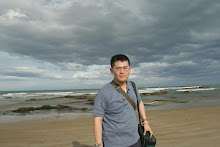
These two infrared frames were never meant to be fine-art masterpieces. The rendition is strange, almost deliberately so—the peculiar colour profile is, after all, part of the experiment.
Yet somehow, I find them more powerful for it.
There is Joel, my old photographic companion, caught somewhere in the amusing transition from a thin, tentative beard towards the full magnificence of a proper jack beard. And alongside him is another transition of sorts: my own experimentation with an infrared camera, seeing a familiar landscape through an unfamiliar spectrum.
Bridgewater Bay is beautiful, but never quite the same twice. The rocks, water, mosses and seaweeds seem to rearrange themselves with every visit, reminding me that photography is not simply about recording scenery. It is also about learning to see differently.
Perhaps that is what I like most about these images. They remind me that I am still moving, still experimenting, still adapting to all sorts of photography.
And then there are those mosses and seaweeds, suddenly transformed into an almost fluorescent blue-cyan—so strange, so unnatural, and wonderfully freaky.
Sometimes the imperfect photograph is the one that tells the more interesting story.
Sony A7RIV
FE 16mm f1.8 G
Linking Treasure Tuesday
It was a cold, wet evening in Adelaide, the rain turning the concrete paths of Chinatown into slick ribbons of reflected light. I nearly lost my footing on the treacherously wet pavement, catching myself just in time as the rain whispered steadily around me.
Above the pedestrians, painted high upon the wall of a Chinese grocery store, a grim-looking Asian woman gazed down with a worried, almost sorrowful expression. Her painted eyes seemed to follow the rain-soaked figures below, as though she too were watching over this melancholy evening in Chinatown.
For a fleeting moment, the scene felt strangely cinematic—the cold rain, the slippery pavement, the hurried footsteps, and that solemn face suspended above it all, silently keeping watch over the passing crowd.
Sony A7RV
FE 16mm f1.8 G
Linking Mural Monday
Two weeks ago, the forecast offered us something rare—a winter day promised to be washed in sunlight. So Joel and I took the opportunity and returned to Pulpit Rock at Cape Schanck, a place we never seem to tire of visiting.
It was one of those days when the ocean felt like a living thing. The air was cold and clean, carrying the deep salt of the Southern Ocean, and every breath seemed to clear away the clutter of ordinary life. Winter had stripped the landscape to its essentials—the cliffs, the sea, the wind, the sky—and in that simplicity there was a particular kind of beauty.
The light was magnificent. Sunlight spilled across the limestone cliffs and restless water, catching the edges of the rocks and turning the cold winter seascape into something almost luminous. The waves rolled endlessly toward the shore, breaking into white against the dark contours of the coast.
Standing there with Joel, breathing in the ocean and feeling the winter chill on our faces, there was nowhere else we needed to be. Just the sea, the wind, the light—and the familiar pleasure of finding beauty once again in a place we had visited before.
Sony A7RV
FE 16mm f1.8 G
Linking Water H2O Thursday
At night, this corner of Chinatown comes alive in a dazzling glow, its lights transforming the streets into something almost magical. By day, Adelaide’s Chinatown can feel rather quiet and unremarkable, but after dark, the colours awaken, the shadows deepen, and the whole place takes on a charm of its own.
Sony A7RV
FE 16mm f1.8 G
Linking Sign2
This winter has not been one for windswept coastlines or long walks beside the sea with Joel. Weekend after weekend, the skies have settled into a brooding blue-grey melancholy, the kind that never quite invites you outdoors. Instead of chasing waves and sunsets, we found ourselves following quieter pleasures, seeking out humble eateries around Melbourne that had earned the admiration of YouTube food enthusiasts. The journey became less about the destination and more about discovering warmth on a plate while the cold lingered outside.
This photograph was taken at night, moments after I stepped out of Joel's car in the restaurant car park. Before anything else caught my attention, it was the sky that stopped me. A deep cobalt gloom stretched overhead, neither fully dark nor touched by the last traces of daylight. It carried the stillness of winter, beautiful in its own restrained way, yet quietly reminding us why the coast had remained beyond our reach for so many weekends.
There are seasons that call us into nature, and there are seasons that gently redirect us elsewhere. This winter has been the latter—a season of shared meals instead of seaside strolls, glowing restaurant windows instead of golden horizons, and conversations across a dinner table rather than against the rhythm of crashing waves. The ocean will still be waiting when spring returns, but for now, these quiet evenings beneath a sombre sky have written their own gentle chapter into our journey together.
Sony A7RV
FE 16mm f1.8 G
Linking Skywatch Friday
At last, a conference has gifted me something increasingly rare: free evenings. With no work schedule waiting to reclaim the hours, I wandered beyond the hotel with my camera, drawn by the quiet allure of unfamiliar streets and fading shopfronts.
The neighbourhood revealed a different side of the city. Many storefronts stood vacant, their dark windows reflecting a sense of uncertainty and change. Along the streets moved a mixture of people carrying burdens both visible and unseen—some asking passers-by for spare coins, others simply drifting through the evening. As I walked with my camera slung over my shoulder, I found myself unusually conscious of my surroundings, reluctant to stray too far alone after dark.
A simple trip to Woolworths for a bag of mandarins left me with an unexpected feeling of guilt. Emerging from the bright aisles into the cool evening air, I was confronted once again by the stark contrast between my own temporary comforts and the hardships evident around me.
One encounter lingered particularly in my mind. A man repeatedly directed crude remarks toward a young woman and appeared to follow her along the street. The scene unfolded uncomfortably close to a police station, a reminder that the presence of authority does not always prevent moments that leave others feeling vulnerable.
Photography often encourages us to look more closely at a place, but sometimes what we see is not beauty alone. These evening walks revealed a city of contrasts—grand historic buildings standing beside empty premises, conference delegates mingling with those struggling on the margins, prosperity and hardship sharing the same pavement. It was a side of Adelaide that felt raw, complex, and difficult to ignore.
Sony A7RV
FE 16mm f1.8 G
Linking Sign2
This corner of Hosier Lane is a gallery within a gallery, a place where the grand murals give way to quieter voices. Here, tiny posters, hand-drawn stickers, faded notices, and cryptic signs gather in layers upon the walls, each one a fragment of a hidden world. They appear and disappear with the passing weeks, pasted over, torn away, and replaced by new messages from unknown hands.
To the casual passer-by they may seem like visual clutter, but a closer look reveals a patchwork of Melbourne's stranger subcultures. Underground musicians announce forgotten gigs. Fringe artists leave traces of their imagination. Activists, dreamers, pranksters, and anonymous philosophers stake small claims upon the bricks. Every scrap of paper hints at a community existing just beyond the edge of ordinary life.
The lane becomes an urban archaeological site where stories accumulate like sediment. Layers of ink, glue, and weathered paper preserve fleeting moments of creativity and rebellion. Some messages are earnest, others absurd, and many remain delightfully mysterious, their meaning known only to those who placed them there.
Standing before the wall, one feels less like a tourist and more like an explorer decoding signals from hidden tribes of the city. In this ever-changing collage, Hosier Lane reveals one of its most fascinating qualities: not merely a place of street art, but a living conversation between countless unseen voices, each leaving a small mark before vanishing back into Melbourne's shadows.
Sony A7RV
FE 16mm f1.8 G
Linking Sign2
The mural feels as though a forgotten lane off La Trobe Street has opened a secret passage to Kyoto. Beneath a velvet night sky, delicate cherry blossoms spill across the walls like pale pink clouds caught in moonlight, their petals drifting silently over the scene. The city noise fades away, replaced by the imagined murmur of water and the rustle of spring leaves.
At the heart of the artwork, a stream of umbrellas flows through the creek bed like a river of colour. Crimson, sapphire, gold and emerald canopies crowd together, glowing against the darkness as though carrying unseen travellers through a dream. They resemble lanterns floating downstream during a festival evening, each umbrella holding its own story, its own destination.
The contrast is enchanting: the soft fragility of the sakura blossoms against the vibrant energy of the umbrellas. Together they create a vision that is unmistakably Japanese, evoking the lantern-lit alleys of Kyoto after rain, where reflections shimmer on wet stone and every corner seems touched by poetry.
Standing before the mural, it is easy to forget that you are in the centre of Melbourne. The narrow laneway becomes a place suspended between worlds—a fleeting glimpse of springtime Kyoto, where blossoms bloom beneath the stars and a colourful tide of umbrellas drifts endlessly through the night.
Sony A7RV
FE 16mm f1.8 G
Linking Mural Monday
Finishing Euphoria felt less like completing a television series and more like emerging from a long, dark storm. It was not an easy watch. Episode after episode drew me deeper into a world of addiction, loneliness, desire, and self-destruction, illuminated by moments of startling beauty and fragile hope.
Last night, I finally reached the end. The story remained gripping to the very last frame, but as the credits rolled, there was little sense of triumph. Instead, a quiet sadness lingered in the room. The characters felt painfully real, carrying wounds that could not be neatly healed or explained away. Their struggles seemed less like fiction and more like reflections of lives unfolding somewhere beyond the screen.
Long after I turned off the television, the atmosphere of the series stayed with me. Its darkness settled like a heavy twilight over the evening, dimming my spirits and leaving my thoughts restless. Sleep came reluctantly. Scenes and emotions drifted through the mind like fragments of a troubled dream, reminders that some stories do not end when the screen goes black. They continue to echo in the silence afterwards, lingering well into the night.
The cave resists the lens, withholding itself in shadow and silence. At London Bridge in Portsea, along the Mornington Peninsula, light is never a given but a negotiation—soft, elusive, demanding patience. The camera strains to read the dimness, to find balance where brightness and darkness refuse easy compromise. Most attempts dissolve into obscurity, surrendered to the shifting mood of the sky and sea. But every so often, in that fragile alignment of low light and stillness, something emerges—this image, shaped months ago, a quiet triumph wrested from the cave’s guarded depths.
Sony A7RV
FE 16mm f1.8 G
Linking Water H2O Thursday
At Raohe Night Market, the night speaks first in signs—bright, insistent, and full of appetite.
A giant red crab hangs above the crowd, claws raised in perpetual invitation, marking a stall devoted to crab sticks—simple, savoury, irresistible. Its glow spills onto the passing faces below, turning hunger into something almost ceremonial.
A few steps on, sweetness takes over. Rolls of cream, folded with peanuts and banana, are assembled with quiet rhythm—soft textures meeting nutty warmth, the air carrying a gentler kind of indulgence.
Then comes the scent of fire and smoke. Handmade sausages turn slowly over heat, their skins catching the light, their aroma weaving through the narrow lanes and pulling you closer without asking.
Here, the market unfolds not in silence but in layers—colour, scent, movement—each stall a small story, each sign a promise, and the night itself alive with the simple, enduring language of food.
Sony A7RV
FE 16mm f1.8 G
Linking sign2
Signs for City God Temple
Year Cake in preparation. Basically made of gluten rice
Back in Melbourne for a single, fleeting day, and already life has resumed its familiar disorder. The city does not wait—it gathers you up mid-breath, mid-thought, and folds you straight back into its rhythm.
Time feels misaligned, stretched thin between time zones. Morning arrives before the body agrees to it; الليل lingers faintly behind the eyes. Jet lag moves like a quiet undertow, dulling the edges of thought, making even simple tasks feel fractionally out of sync.
Work, meanwhile, accumulates without apology. Papers, preparations, obligations—they stack quickly, each demanding clarity when the mind is still half elsewhere. There is no gentle re-entry, only immersion.
And yet, beneath the fatigue and the clutter, there is something recognisable in the chaos. A cadence. The hum of trams, the cool shift in the autumn air, the sense that this mess—this hurried, imperfect return—is, in its own way, the shape of living.
Sony A7RV
FE 16mm f1.8 G
It is a disciplined cultivation of right mindfulness—a deliberate guarding of one’s thoughts and intentions—where resentment is not allowed to arise, and judgment is not hastily formed. Instead, one meets the unfolding circumstances of family life with equanimity, accepting what is offered without resistance, and responding with compassion, patience, and understanding. In doing so, one embodies a central principle of Buddhist practice: to relate to others not through reactivity, but through a steady, discerning awareness grounded in loving-kindness.
Linking Sign2
In Hsinchu City God Temple, the air is thick with incense and quiet petitions, a place where the human and the unseen brush gently against one another. Lanterns glow in warm reds and golds, their light flickering across carved beams and painted eaves, each surface dense with stories, guardians, and centuries of devotion. The temple does not merely stand—it hums, alive with whispered wishes and the soft shuffle of footsteps across worn stone.
Within its inner sanctum resides the Yue Lao, the old man beneath the moon, keeper of red threads that bind destined hearts. He is, in essence, a distant cousin to Cupid, yet far more patient, more deliberate. Where Cupid’s arrows strike in sudden impulse, Yue Lao ties invisible knots—subtle, enduring connections that draw two lives together across time. Before him, offerings are laid with quiet hope: sweet cakes, fragrant tea, handwritten prayers folded with care. Those who come seek not only love, but the right kind of love—one that endures beyond the first spark.
Beyond the temple gates, the sacred gives way seamlessly to the earthly. The surrounding streets pulse with life, an extension of the shrine’s energy in another form. Vendors call out over the sizzle of oil and rising steam, and the scent of food curls through the air, irresistible and grounding. Here, devotion and appetite coexist without contradiction.
Bowls of four gods soup are ladled out, rich with herbs and slow-simmered depth, said to restore balance to the body as the temple restores something quieter within the spirit. Nearby, the delicate chew of rou yuan offers its own comfort—translucent skin giving way to savoury filling, a small, perfect encapsulation of the island’s culinary craft.
To wander here is to move between realms without noticing the boundary: from prayer to nourishment, from incense smoke to cooking steam, from the quiet hope of the heart to the immediate pleasures of the senses. And in that seamless passage, the visit lingers—not just as memory, but as a feeling, warm and enduring, like a thread quietly tied.
Sony A7RV
FE 16mm f1.8 GM
Linking Treasure Tuesday
Raohe Night Market was always meant for wandering—an evening corridor of light and appetite, where footsteps slow and hunger becomes a kind of curiosity. It is a place built for grazing and drifting, for letting the night unfold one bite at a time.
When I was young, it was a reward—earned, not given. To rank first in class was to be granted this small, glowing world. I remember the press of the crowd, the call of vendors, the thick, mingling scents that clung to the air—pepper, smoke, sugar—each step a promise of something indulgent and alive.
Now, the street feels different. Cleaner, quieter in its own way, as if the edges have been carefully smoothed. The smells no longer gather and linger as they once did; they pass lightly, almost politely. Everything gleams a little more, arranged with intention, touched by a kind of refinement.
And yet, beneath that polish, something remains—the echo of footsteps from years ago, a younger self walking wide-eyed through the night, holding tightly to the sweetness of reward, and the simple joy of having arrived.
Sony A7RV
FE 16mm f1.8 GM
Linking Sign2
The stalls at Raohe Street Night Market glow with a new brightness now. Rows of signs shimmer in reds, yellows, and electric blues, their colours reflecting on wet pavement like fragments of neon rainbows. They no longer carry the rough, weathered look I remember from childhood. Back then the stalls felt improvised—canvas sheets, dented metal carts, smoke curling into the night. Now they stand tidier, brighter, almost theatrical, as if the market has dressed itself for the modern city.
Still, beneath the polished lights, the same aromas drift through the lanes—soy, garlic, frying batter, a hint of charcoal. The heart of the place hasn’t really changed; it has simply learned to shine a little more.
This trip I travel light, carrying only a small camera fitted with a Olympus M.Zuiko Digital ED 16mm f/1.8 lens. It feels almost weightless around my neck, bright enough to drink in the night without effort. Even in the dim corners of the market, where steam rises from woks and lanterns sway gently in the evening air, the lens gathers the glow easily.
With such light gear, wandering becomes effortless. I drift slowly through the colourful corridors of food and light, lifting the camera now and then, catching small moments before they disappear into the moving crowd and the endless night of Taipei.
Sony A7RV
FE 16mm f1.8 G
Arguments that dismiss the risk of AI-driven job displacement by citing past technological revolutions overlook a critical variable: time. Historically, the emergence of new industries allowed gradual workforce adaptation, enabling individuals to acquire relevant skills. However, if AI accelerates innovation cycles to the point where new roles are rapidly created and automated in quick succession, workers may be unable to reskill fast enough to remain employable. This compression of adaptation time risks rendering individuals repeatedly obsolete, with significant psychological and socioeconomic consequences.
Linking Sign2
The top photo catches the new rapid transport station, its roof dressed in a bright, almost playful mosaic of colour. Even under the grey wash of evening rain, it glows—tiles and panels catching the light like a scattered palette above the platforms of Taipei Metro. In a city that moves quickly, even its stations seem to dress with a certain theatrical flair.
By the time I reached Raohe Street Night Market, the rain had settled into the evening like a quiet companion. The usual sea of umbrellas and shoulders was thinner tonight. Many stalls stayed shuttered, their metal doors pulled down against the drizzle. Strangely, I liked it better this way. Night markets are famous for their crowds, but I prefer the softer version—the quieter alleys where you can linger, breathe, and actually see the food being made.
The smell of oyster omelette drifted through the damp air. It has always been a childhood favourite of mine. One bite and the years fold back to high school days: after-class hunger, loose coins in a pocket, the thrill of street food sizzling on a hot iron plate. These days the price has climbed steadily, almost luxurious for something so humble. But the magic has never been the oysters or the eggs alone—it is always the sauce, that glossy sweet-savory glaze poured over the top.
Nearby, a stall fried cubes of Stinky tofu until they turned crisp and golden. The smell arrives long before the stall appears—pungent, unapologetic, and oddly comforting. The outside crackles, the inside stays soft, and together they make something impossible to forget. It feels rarer now. Everywhere you look there are glowing signs for Starbucks or McDonald's, as if the global menu has slowly nudged aside some of the older flavours.
And then there is duck blood, simmering patiently in a dark herbal broth. The soup sits on the fire for days, absorbing the deep perfume of Chinese medicine—roots, bark, and quiet bitterness mellowed by time. The cubes are silky and rich, the kind of dish that carries generations of kitchen knowledge in a single bowl. It is the sort of taste you rarely encounter in Australia, something inseparable from the streets and memory of Taiwan itself.
Sony A7RV
FE 16mm f1.8 GM
Linking Treasure Tuesday
This stretch of Bridgewater Bay at Blairgowrie lay largely forgotten, a rough and secretive margin of coast where few ever wandered. Reaching it required care and nerve, for the rocks were treacherous and the sea claimed the ground for itself most of the time, submerging the path in restless water as though to remind visitors that this place belonged, first and always, to the ocean.
Sony A7RV
FE 16mm f1.8 GM
Linking Treasure Tuesday